
For buyers comparing solar modules from a factory catalogue, the first question is not only wattage. Specifications matter, but so does context: a practical guide to solar panel performance can help frame what those numbers mean before a bulk order is placed.
Bulk purchasing is different from buying one or two panels for a small project. A distributor, installer, EPC company, or commercial buyer has to think about consistency, documentation, warranty support, logistics, packaging, and how the chosen module will behave across many rooftops or ground-mounted arrays.
The cheapest module on the list is not always the lowest-cost module in the field. If a panel performs inconsistently, arrives with handling damage, lacks the correct certificates, or creates compatibility issues with the inverter design, the saving can disappear quickly.
Start With the Application, Not the Product Code
Before comparing model numbers, clarify where the panels will be used. A residential rooftop, agricultural building, commercial warehouse, carport, and utility-scale ground project do not always need the same type of module.
Residential rooftop projects
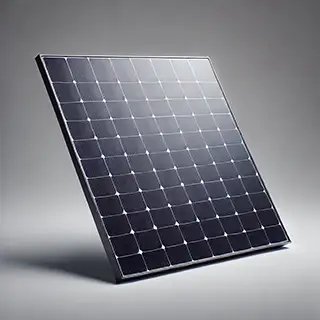
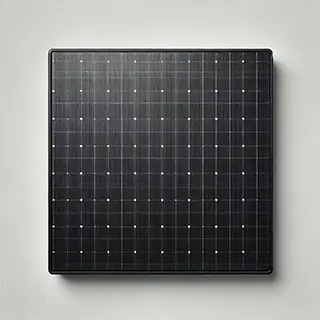
For homes, appearance, panel size, roof layout, weight, low-light performance, and warranty terms often matter as much as power rating. Full black monocrystalline panels may be preferred when the visual result is important, especially on visible rooftops.
Commercial and industrial systems
For larger roofs, buyers usually focus on output per square meter, installation speed, module reliability, electrical compatibility, and predictable supply. A small difference in module size or connector type can affect planning when hundreds of panels are involved.
Ground-mounted and open-space projects
Ground-mounted arrays may allow larger panels and more flexible layouts. In some cases, bifacial modules can be considered if the rear side of the panel can capture reflected light from a suitable surface.
Look Beyond the Wattage Label
Panel wattage is the easiest number to compare, but it does not tell the whole story. Two panels with similar wattage may perform differently because of cell technology, module construction, tolerance, temperature behavior, and degradation rate.
A strong solar panel specification is not just a high number on the front page. It is a combination of output, stability, quality control, and long-term predictability.
Power tolerance
Positive power tolerance is useful because it shows the module should meet or slightly exceed its rated output under standard test conditions. For bulk orders, this can help reduce variation across a shipment.
Low-light behavior
Many projects operate in regions with cloudy mornings, seasonal haze, or variable weather. In these cases, low-irradiance performance can become an important part of real-world energy yield.
Temperature performance
Solar panels lose some efficiency as temperature rises. Buyers working in hot climates should review the temperature coefficient and compare how different modules behave under heat.
Check Certifications and Quality Control
For international buyers, certifications are not just marketing details. They can affect customs, project approval, financing, insurance, and end-customer confidence. Before ordering, ask for up-to-date certification documents and make sure the documents match the exact model being supplied.
Documents worth requesting
- Product datasheet for the exact module model
- Warranty document with clear product and performance terms
- Relevant CE, TUV, UL, or other market-specific certificates
- Factory inspection or quality control process details
- Packaging and shipment specifications
- Electrical parameters for inverter compatibility checks
A small detail that prevents large problems
Ask whether the certificate applies to the same wattage, cell format, glass type, frame color, and junction box configuration being quoted. Similar-looking products may not always share the same documentation.
Compare Monocrystalline, Half-Cell, and Bifacial Options
Monocrystalline panels are widely used because they offer strong efficiency and stable performance. For many buyers, they are a practical default choice for residential, commercial, and industrial projects.
Half-cell modules can improve electrical behavior and reduce some losses compared with older full-cell designs. They may also help with better performance under partial shading, depending on the module layout and system design.
Bifacial panels are more project-specific. They can generate additional energy from the rear side, but only when installation conditions allow reflected light to reach the back of the module. They are usually more interesting for ground-mounted systems, flat roofs with reflective surfaces, carports, and some commercial installations.
When bifacial panels may make sense
- The rear side of the module is not blocked
- The surface below the panel reflects enough light
- The mounting height and tilt are suitable
- The project owner wants to maximize yield from available land or roof space
- The financial model accounts for realistic rear-side gain, not optimistic assumptions
Review Warranty Terms Carefully
Warranty language should be read before the order is placed, not after a problem appears. Buyers should distinguish between product warranty and performance warranty. The first usually relates to defects in materials or workmanship, while the second relates to power output over time.
For bulk buyers, it is also important to understand the claim process. Who handles warranty communication? What evidence is required? Are replacement panels available if a model is discontinued? How are shipping costs handled?
Do Not Ignore Packaging and Logistics
Solar panels are durable in operation, but they still need careful handling during transportation. For international shipments, packaging quality can make a direct difference in breakage rates and project delays.
Questions to ask before shipment
- How many panels are packed per pallet?
- What protection is used for corners and glass surfaces?
- Are pallets suitable for long-distance sea freight?
- Can the supplier provide loading photos before dispatch?
- What is the process if damage is found on arrival?
It is better to confirm these details early, especially when panels are being shipped across borders or ordered for a time-sensitive installation schedule.
Match the Panel to the Inverter and System Design
A panel can be high quality and still be the wrong choice for a particular system design. Voltage, current, string length, temperature range, and inverter limits must be checked before final approval.
This is especially important when replacing older panels, mixing module types, or designing systems for extreme climates. A technical review can prevent mismatch issues and reduce the risk of underperformance.
Final Buyer’s Checklist
Before placing a bulk order for monocrystalline solar panels, buyers should slow down and verify the details that affect long-term project value.
- Confirm the application: residential, commercial, industrial, or ground-mounted
- Compare more than wattage: efficiency, tolerance, degradation, and temperature behavior
- Request certificates for the exact model being quoted
- Check warranty terms and claim procedures
- Review packaging standards and shipment details
- Make sure the module works with the planned inverter design
- Clarify lead time, customization options, and after-sales support
Bulk solar purchasing rewards careful preparation. When buyers review performance, documentation, system compatibility, and logistics before ordering, they are more likely to receive panels that install smoothly, perform reliably, and support stronger long-term project results.